
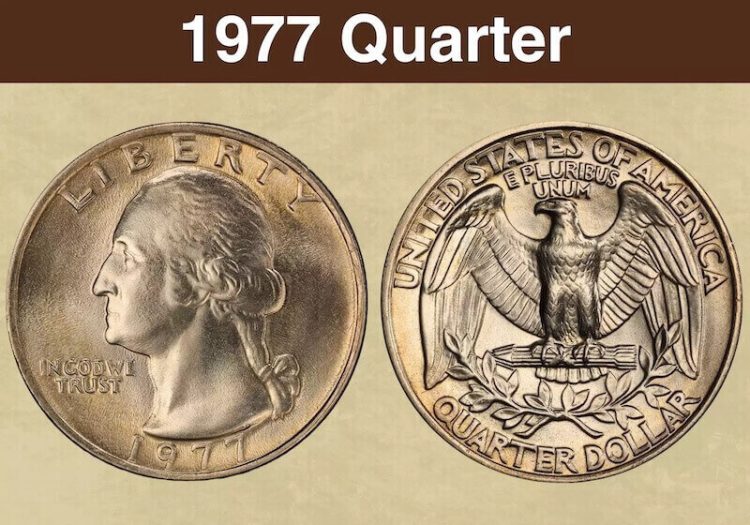
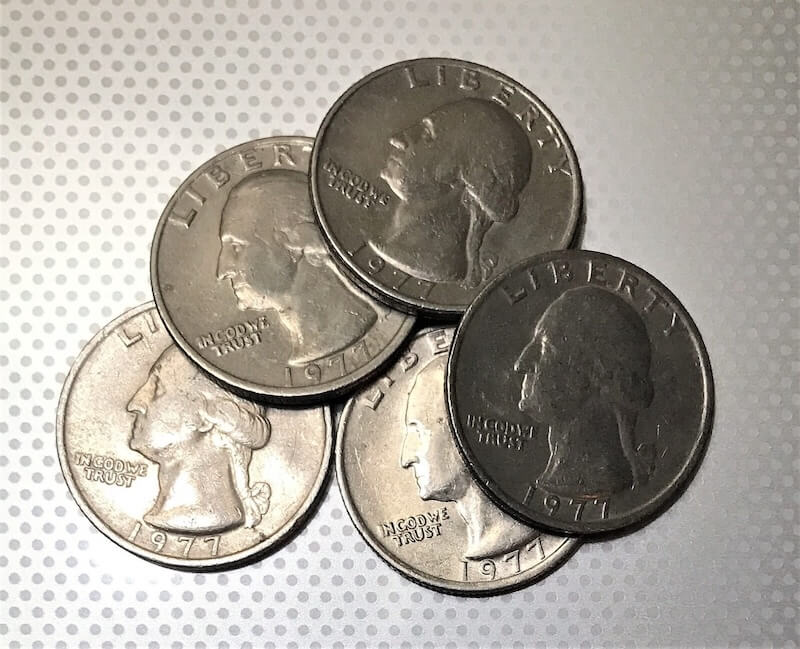
Most 1977 Washington quarters are still worth only their face value. They were produced in large quantities and remain common in circulation today. However, a small number stand apart from the rest. At LightFeed, we examine how the most valuable 1977 quarters gain their worth not from age alone, but from rare minting errors, unusual production circumstances, and exceptional conditions that make them highly desirable to collectors.
Why Most 1977 Quarters Are Common
The U.S. Mint struck hundreds of millions of quarters in 1977 across multiple facilities, including Philadelphia and Denver. These coins were intended for everyday use, which is why most examples show signs of wear and remain plentiful today.
Because of this high production volume, a typical circulated 1977 quarter is usually worth no more than 25 cents. Even uncirculated examples without unusual traits rarely command premiums. The key distinction lies in rarity and that rarity is almost always tied to mint errors or extraordinary conditions.
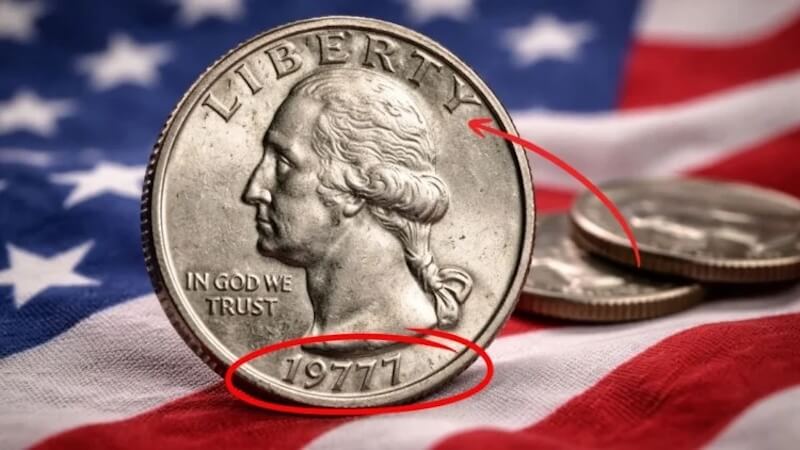
What Makes the Most Valuable 1977 Quarters Different
Collectors value scarcity, visual impact, and authenticity. The most valuable 1977 quarters combine one or more of the following characteristics:
- Uncommon manufacturing anomalies that emerged during the striking process.
- Strikes on incorrect planchets or off-center designs.
- Exceptionally high-grade condition confirmed by professional grading.
- Clear documentation and originality.
Without at least one of these elements, a 1977 quarter is unlikely to attract strong collector interest.
Rare Error Types That Drive Value
Mint errors are the primary reason some 1977 quarters sell for hundreds – or even thousands – of dollars. Below are the most significant error categories collectors look for.
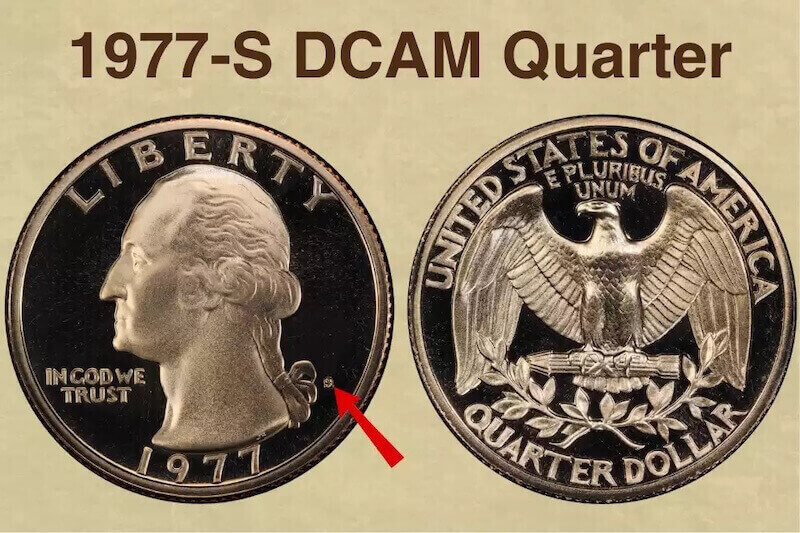
Double Die Errors
Double die errors occur when the coin die is misaligned during the manufacturing process, creating doubled images on lettering or design elements. On 1977 quarters, doubling may appear on:
- “LIBERTY”.
- “IN GOD WE TRUST”.
- Washington’s profile.
Clear and well-defined doubling places these coins among the most valuable 1977 quarters, especially when confirmed by professional grading services.
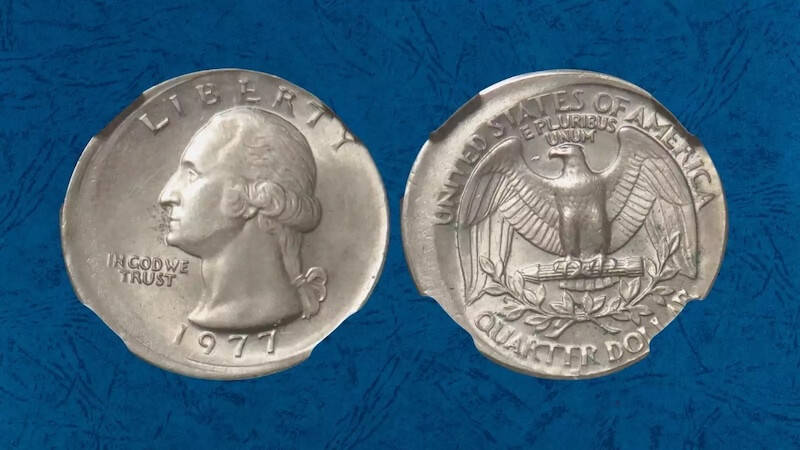
Off-Center & Broadstrike Errors
Off-center strikes happen when the coin blank is not properly seated during striking. If the date and mint mark remain visible, these errors are especially collectible.
Broadstrikes occur when the retaining collar is missing, causing the coin to spread beyond its normal diameter. Both error types are visually distinctive and can command strong premiums depending on severity and condition.
Wrong Planchet & Off-Metal Errors
Some of the most dramatic – and valuable – errors involve coins struck on the wrong metal blank. For example, a 1977 quarter struck on a planchet intended for a different denomination or composition can be significantly heavier or lighter than normal.
These rare mistakes are widely recognized among the most valuable 1977 quarters due to their scarcity and unmistakable characteristics.
Clipped Planchet Errors
Clipped planchet errors occur when part of the metal blank is missing before striking. The result is a coin with a curved or straight missing section along the edge. While minor clips are common, larger and well-defined examples are far more valuable.
The Role of Condition & Grading
Condition plays a critical role in determining value, even for error coins. Two identical error quarters can sell for vastly different prices depending on preservation.
Coins graded at the higher end of the Mint State (MS67 or above) or Proof (PR68–PR70) scale are far more likely to rank among the most valuable 1977 quarters. Professional grading by trusted services such as PCGS or NGC provides authentication and assigns a standardized grade that buyers rely on. Uncertified coins, even those with genuine errors, often sell for less due to uncertainty.
How to Tell If Your 1977 Quarter Might Be Valuable
Before assuming a coin is rare, careful inspection is essential:
- Use a magnifying glass to check for doubling or irregular design features.
- Weigh the coin to detect potential wrong-planchet errors.
- Examine the edges for clipping or unusual expansion.
- Avoid cleaning the coin, as this permanently reduces collector value.
If a coin shows unusual characteristics, professional evaluation is the next logical step.
Realistic Value Ranges for the Most Valuable 1977 Quarters
Despite online rumors suggesting million-dollar values, most rare 1977 quarters sell within more realistic ranges:
- Minor mint errors: $50 – $200.
- Clear doubled die or off-center strikes: $300 – $1,500.
- Wrong-planchet or dramatic errors (graded): several thousand dollars.
Prices depend heavily on rarity, condition, and market demand. Only verified, exceptional examples reach the highest tiers of value.
Best Ways to Sell Rare 1977 Quarters
Selling strategy matters almost as much as the coin itself. To maximize returns:
- Have the coin professionally graded before selling.
- Choose platforms that attract serious collectors, such as specialty auctions.
- Avoid quick sales without multiple opinions.
- Keep documentation and certification visible.
Coins believed to be among the most valuable 1977 quarters often perform best in curated auctions rather than casual marketplaces.
Tips to Maximize Sale Price
Achieving the best possible price for a collectible quarter depends on more than the coin itself. How you present, document, and sell the piece plays a major role in shaping buyer perception and final value.
-
If the coin has been authenticated and graded by a reputable service such as PCGS or NGC, make this information highly visible in any listing or auction description. Certified coins inspire greater buyer confidence and typically attract stronger offers.
-
High-quality photographs that capture both sides of the coin, along with close-ups of key details, allow potential buyers to evaluate condition and rarity accurately. Good lighting and sharp focus help convey professionalism and credibility.
- Lower-value collectibles may perform well through local dealers or online marketplaces, while higher-value or rare pieces often benefit from specialist auctions where experienced collectors actively compete.
-
Rare coins tend to reach their highest prices when sellers remain patient. Avoid quick decisions that may undervalue the coin, especially if interest is still developing.
-
Clear descriptions explaining the coin’s rarity, condition, and any notable features help buyers understand why it commands a premium. Transparency reduces hesitation and encourages informed bidding.
Strong presentation and patience can significantly increase final sale prices.
While most 1977 quarters remain common, a small number stand out due to rare mint errors and exceptional condition. These select examples represent the most valuable 1977 quarters sought after by collectors today.
Understanding what makes a coin valuable – and approaching evaluation and selling strategically – can transform an overlooked piece of pocket change into a legitimate collectible. With careful inspection, proper grading, and informed decisions, you can determine whether your 1977 quarter is ordinary or something far more special.